Yard by Yard, Block by Block: How Southern Neighbors Are Fixing What Politicians Won't
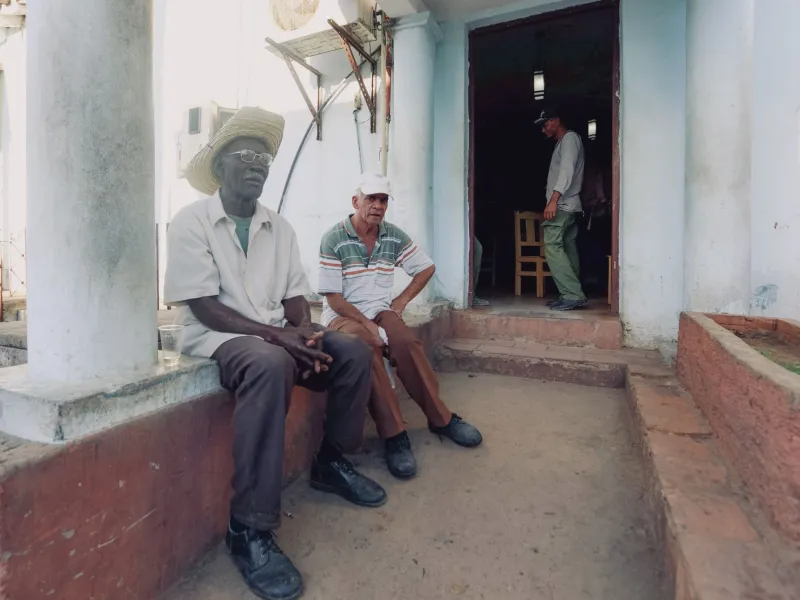
Forget the town hall meeting with its fluorescent lights and Roberts Rules of Order. In small Southern towns, the real civic work is happening over sweet tea, on somebody's back porch, or in the parking lot after Sunday service. A new generation of community organizers is proving that the oldest Southern instinct — looking out for your neighbors — might just be the most powerful political force around.
There's a particular kind of problem-solving that doesn't have a name in a policy textbook. It doesn't show up in a grant proposal or a municipal budget. It happens when a woman in Brewton, Alabama, gets fed up with the busted streetlight on her corner, calls three people she trusts, and within two weeks has a neighborhood watch committee, a direct line to the city council, and a potluck scheduled to keep the momentum going. That's not activism in the cable-news sense. That's just the South doing what it's always done.
The Living Room as a Town Square
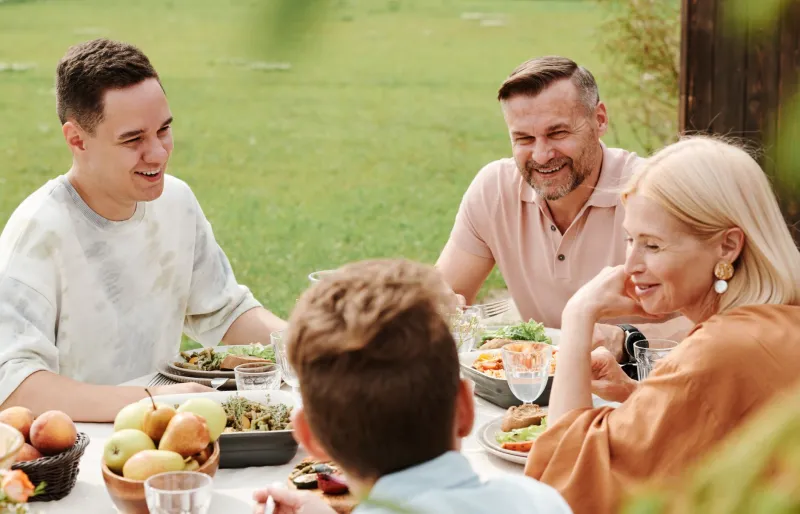
Across the region — from the Mississippi Delta to the Carolina Piedmont, from the Texas Hill Country to the Georgia wiregrass — informal gathering spaces are quietly becoming engines of civic change. These aren't organized movements with slick logos or hashtag campaigns. They're more like standing appointments. A group of parents who started meeting monthly to talk about school safety. A cluster of small business owners who share a table at the same diner every Tuesday. A rotating supper club that, somewhere between the biscuits and the banana pudding, started drafting a petition about the county's failing water infrastructure.
What makes these gatherings effective isn't their size or their structure. It's the trust built into them. Southern community culture has always run on relationship capital — the kind you earn by showing up, by knowing somebody's grandmother, by being the person who brings food when there's a funeral. That social infrastructure, often dismissed as mere friendliness, turns out to be remarkably useful when you need forty signatures or a volunteer crew to clean up a vacant lot.
"We don't call it organizing," says one community leader in a small Tennessee town who asked not to be named. "We just call it being neighbors. But I guess when you look at what we've actually gotten done, yeah — it's organizing."
Old Values, New Energy
What's shifting is who's doing the gathering. Younger Southerners — many of them the first in their families to leave and come back, or the first to stay and build something instead of leaving — are picking up traditions of collective action that have deep roots in the region. The Black church's long history of organizing communities around shared needs. The rural co-op model that helped farming families survive hard times. The volunteer fire department that doubled as a civic backbone for generations.
They're threading those traditions into new contexts: tenant advocacy groups that meet at the laundromat, environmental coalitions that got their start at a fishing club, immigrant support networks that operate out of a taqueria in a small Georgia town nobody outside the county has heard of.
The issues are hyperlocal and deeply felt. A lack of reliable broadband in a community where kids are expected to do homework online. A dollar store moving in where a grocery store used to be, leaving elderly residents without fresh food. A developer eyeing land that's been a neighborhood park in everything but name for thirty years. These aren't abstract policy debates. They're the texture of daily life, and the people pushing back on them aren't waiting for a state legislator to notice.
The Porch as a Political Instrument
There's a reason the front porch keeps showing up as a metaphor for Southern civic life. It's not nostalgia. It's architecture with intent. The porch is a transitional space — not quite public, not quite private — where conversations can happen that wouldn't fit in a formal meeting room and don't belong behind a closed door. It's where you can say what you actually think and still be neighbors at the end of it.
That spirit carries into how these informal organizers work. They're not trying to build coalitions across ideological divides so much as they're focusing on the thing right in front of them — the crumbling road, the shuttered health clinic, the kids with nowhere safe to go after school. When the problem is specific enough and close enough to home, it has a way of cutting through the noise.
In a small Louisiana parish, a group of women who started a community garden to address food access ended up testifying before the parish council about zoning regulations. In a North Carolina mountain town, a neighborhood cleanup crew gradually evolved into a housing advocacy group after members started comparing notes about predatory landlords. The path from neighbor to organizer is shorter than most people think, especially when you've got somewhere comfortable to sit and talk it through.
What the South Knows That the Rest of the Country Doesn't
There's a tendency, in national conversations about civic engagement, to treat the South as a place where change happens slowly or not at all. That reading misses something important. The South has produced some of the most sophisticated and durable community organizing this country has ever seen — born of necessity, sharpened by adversity, and passed down in ways that don't always make it into the history books.
What's happening in small towns right now is part of that continuum. It's neighbors deciding that waiting on somebody else to fix things is a luxury they can't afford. It's the quiet accumulation of small actions — a meeting here, a phone call there, a casserole dropped off at the right moment — that adds up to something real.
The politicians will catch up eventually. Or they won't. Either way, the work is getting done.
And somewhere, right now, somebody's putting on a fresh pot of coffee and pulling chairs out to the porch. There's a problem that needs solving, and the people who can solve it are about to sit down together. That's not a small thing. Around here, that's how it's always started.