Slow Burn, Strong Roots: How Southern-Style Mentorship Is Quietly Reshaping the Modern Workplace
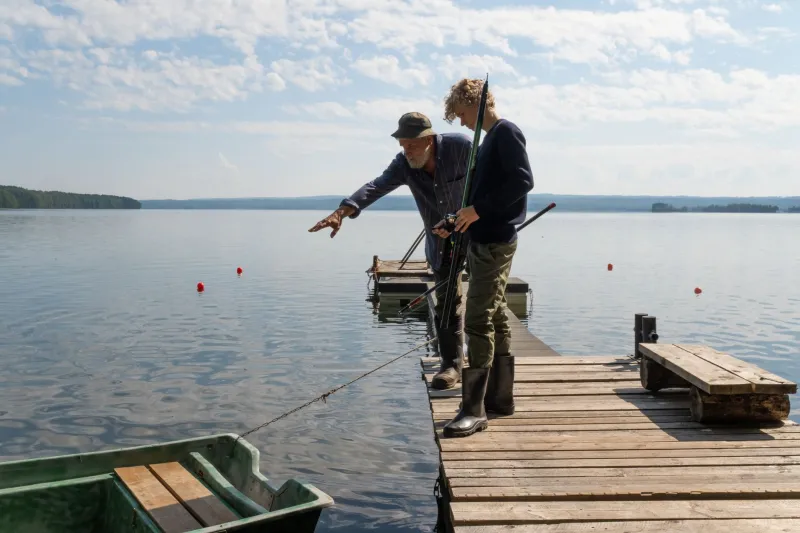
There's a scene that plays out in small towns across the South every single week. Two men — one older, one younger — standing at the edge of a dock before sunrise. Coffee in hand, neither one saying much. The fish aren't biting yet, and that's fine, because the fishing was never really the point. By the time they load the truck back up, something has passed between them. Career advice, life philosophy, a story about a mistake made twenty years ago that the younger man won't forget. No agenda. No PowerPoint. No follow-up survey.
That's Southern mentorship. And it's been working a whole lot longer than any corporate program you've ever sat through.
The Problem With the Playbook
Ask anyone who's gone through a formal workplace mentorship program and you'll get a familiar look — somewhere between appreciation and mild exhaustion. The structure is usually the same: get matched with someone above your pay grade, schedule monthly meetings, fill out a development plan, repeat until someone stops responding to emails.
The intentions are good. The execution often falls flat. And the reason, according to people who study workplace culture and people who just know human beings, is the same: you can't manufacture trust on a calendar invite.
"The best mentors I ever had never called themselves mentors," says one regional bank executive based in Birmingham who asked to remain anonymous. "They just kept inviting me places. Hunting trips. Church. Their kid's ballgame. And somewhere in the middle of all that, they handed me everything they knew."
That's not an accident. That's a system — it just doesn't come with documentation.
Reading the Room, Southern Style
Southern professional culture has always operated on a particular kind of social intelligence. It's the understanding that relationships have to be seasoned before they can carry real weight. You don't ask a favor before you've broken bread. You don't take advice from someone you don't trust, and you don't trust someone you don't know.
This plays out in spaces that might look informal to an outsider — the feed store on a Saturday morning, the golf course on a slow Wednesday, the corner booth at a diner that's been there since 1962. These aren't just social settings. They're where deals get blessed, where younger professionals get quietly evaluated, and where wisdom gets passed down without anyone making a ceremony of it.
The genius of it is the lack of pressure. When nobody's performing for a performance review, people actually talk. And when people actually talk, they say things that matter.
Companies Starting to Pay Attention
A growing number of businesses — particularly in the South but increasingly beyond it — are trying to reverse-engineer this dynamic. Rather than relying on formal mentorship structures alone, they're building in what some organizational consultants are calling "proximity time": structured-but-loose opportunities for senior leaders and emerging talent to just exist in the same space doing something other than work.
Some companies are sponsoring fishing tournaments where teams are mixed across seniority levels. Others are organizing tailgate events before college football games, or setting up regular informal lunches with no agenda beyond showing up. One Nashville-based logistics company reportedly ditched its formal mentorship matching system entirely in favor of quarterly off-site retreats built around outdoor activities — and saw measurable improvement in retention numbers within eighteen months.
The logic tracks. When you share an experience — especially one that's a little uncomfortable, a little unpredictable, a little bit outside the office — you build the kind of rapport that a conference room simply can't produce. You see how someone handles frustration. You hear what they care about when they're not performing. You get the real version of them, and they get the real version of you.
It's Not Just the Good Ol' Boys Network
Here's where it gets important to be honest: the traditional Southern mentorship model has not always been accessible to everyone. The fishing trips and golf outings and back-porch conversations have, historically, skewed toward a pretty specific demographic. Women, Black professionals, and anyone outside the inner circle of a given community have often been left on the outside of these informal pipelines — and that's a real cost, both to the individuals excluded and to the organizations that missed out on their talent.
The promising shift is that companies trying to adopt this model thoughtfully are also working to make it genuinely inclusive. That means intentionally broadening who gets invited into informal spaces, making sure proximity time isn't just happening among people who already look alike, and recognizing that the wisdom being passed around in these settings has value precisely because it's not gatekept by a job title.
Several women-led businesses in cities like Atlanta, Charlotte, and New Orleans have built their own versions of this model — mentorship over Sunday brunch, over book clubs, over community garden projects. The format is different. The underlying principle is the same. Show up consistently, build real trust, and let the guidance follow naturally.
What Gets Lost When We Over-Formalize
There's a broader cultural conversation happening right now about authenticity in professional spaces — about whether the polished, optimized, metric-driven version of workplace culture is actually producing the kind of leaders and relationships that organizations need for the long haul.
Southern mentorship culture, at its best, offers a counter-argument. It says that the most durable professional relationships are built slowly, in settings that don't feel like work, by people who are willing to invest time without an immediate return. It says that wisdom doesn't transfer through a slide deck — it transfers through a story told at the right moment by someone who's been through it themselves.
It also says that loyalty isn't bought with a salary. It's earned through showing up, over and over, in ways that have nothing to do with the bottom line.
Taking It Back to the Basics
If there's a takeaway for companies trying to build stronger leadership pipelines and more authentic cultures, it might be this: stop trying to program the relationship and start creating the conditions for one.
That might mean giving managers dedicated time to spend informally with their teams. It might mean rethinking what counts as a legitimate use of company time. It might mean trusting that a two-hour lunch with no agenda is actually one of the most productive things a senior leader can do.
Down here, we've known that for a long time. We just called it being neighborly.
And honestly? The rest of the country could stand to take a few notes.