Small Batch, Big Dreams: How Southern Craft Distilleries Are Taking Local Spirits to the World Stage
There's a particular kind of confidence that comes with pouring someone a drink you made yourself. Ask any craft distiller in the South and they'll tell you — that moment when a stranger takes the first sip, pauses, and reaches for another taste? That's the whole thing right there. That's why they do it.
Across the region, from the hill country of Tennessee to the coastal lowlands of Georgia, a new generation of distillers is doing something remarkable: they're taking deeply personal, deeply local spirits and convincing the rest of the world to fall in love with them too. No corporate backing. No flavor labs. Just family recipes, regional grain, and the kind of stubbornness the South has always been pretty good at.
The Roots Run Deeper Than You Think
Southern distilling didn't start with a trend piece or a Brooklyn cocktail bar discovering bourbon. It started in the hills and on the farms, where families made whiskey the same way they put up preserves — because it made sense, because it used what they had, and because it tasted good.
For generations, a lot of that knowledge lived quietly. Prohibition shuttered legal operations, and even after repeal, heavy regulation kept small producers on the sidelines for decades. But something shifted in the 2000s when state laws across the South started loosening up, allowing craft distilleries to open tasting rooms, sell direct to consumers, and actually build a brand around what they were making.
That legal breathing room cracked open a door, and a whole lot of determined Southerners walked right through it.
What Makes Southern Spirits Different
Ask a craft distiller in Oregon or Vermont what makes their product special and you'll hear about innovation, about pushing boundaries, about reinventing what spirits can be. Ask one in Alabama or Mississippi and you'll more likely hear about their grandfather, about a specific patch of land, about a corn variety that doesn't grow anywhere else.
That rootedness is the defining characteristic of the Southern craft spirits movement. Where other regional scenes sometimes lean hard into novelty, Southern distillers tend to lean into memory. The best of them aren't trying to make something new so much as they're trying to make something true.
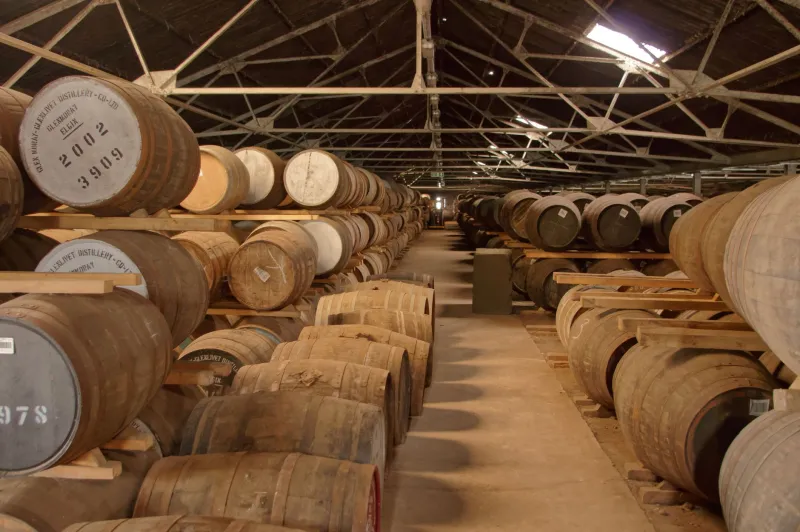
That means sourcing grain locally whenever possible — and in a region with serious agricultural history, that's easier than you might think. It means using water from specific springs or aquifers that give their whiskey a distinct mineral character. It means aging in warehouses where the Southern heat does things to a barrel that simply can't be replicated in cooler climates. Those brutal summers accelerate the interaction between spirit and wood, pulling color and flavor in ways that Northern distillers have to work a lot harder to achieve.
Profiles in Proof
Take a drive through the distillery trails that have sprung up across states like Tennessee, Kentucky, Georgia, and the Carolinas and you'll meet people whose stories could fill a book.
There are the third-generation farm families who watched their grandparents lose money on raw grain for decades before finally deciding to add value themselves — turning their own corn and rye into whiskey and selling it directly out of a converted tobacco barn. There are the veterans who came home looking for something to build and found it in the precision and patience that distilling demands. There are the young Black entrepreneurs reclaiming a history that was often written out of official Southern distilling narratives, honoring the enslaved and free Black workers whose skills and knowledge shaped American whiskey even when their names were never put on the label.
Each of these stories is different, but they share a common thread: a desire to make something that means something, and to share it with people who'll appreciate what went into it.
Going Global Without Losing the Plot
Here's where it gets interesting — and where a lot of craft producers in other industries have stumbled. Growth is exciting right up until it isn't. Scale up too fast, start chasing volume over quality, and you lose the very thing that made people care about your product in the first place.
The Southern distillers who are navigating this best seem to have figured out that their story is the product, not just the packaging around it. When a retailer in Tokyo or a bar program in London picks up a small-batch Georgia bourbon, they're not just buying a spirit — they're buying into a place, a lineage, a way of doing things. That's a harder thing to fake than a recipe.
Some are staying deliberately small, turning down distribution deals that would require them to compromise on grain sourcing or aging time. Others are growing carefully, bringing in partners who understand that the brand's integrity is its actual value. A few have managed to land on national and international shelves without losing the plot — and the ones who've done it tend to be fiercely protective of their process, even as they celebrate their reach.
Export numbers for American craft spirits have climbed steadily over the past decade, with Southern-produced whiskeys and gins showing up in markets from the UK to Japan to Australia. Whiskey tourism has become a genuine economic driver in states like Tennessee and Kentucky, drawing visitors who want to see the barrels, meet the distiller, and understand what makes this particular bottle different from the one next to it on the shelf.
The Tasting Room as Cultural Ambassador
If you haven't visited a Southern craft distillery lately, you're missing something that goes well beyond a free sample. The best tasting rooms have become genuine cultural spaces — places where local history gets told through the spirits being poured, where the food on the charcuterie board comes from farms up the road, where live music on the weekend is by someone from the next town over.
It's a version of Southern hospitality that translates surprisingly well to visitors from outside the region. People show up expecting a drink and leave having learned something — about agriculture, about history, about the particular character of a place. That's not an accident. Distillers who've built those experiences understand that the visit plants a seed that grows into loyalty long after the bottle is empty.
What's Next in the Glass
The craft spirits scene in the South isn't slowing down. New distilleries keep opening, new categories keep emerging — Southern gin made with native botanicals like muscadine and magnolia bark, agricole-style rums from Louisiana sugarcane, fruit brandies from Appalachian orchards that have been producing for a century and a half.
The next chapter of this story is still being written, and the people writing it are doing it one carefully considered batch at a time. They're proud of where they come from, clear-eyed about where they're going, and absolutely certain that the South has something worth sharing with the rest of the world.
You just have to pour it the right way.