Unhurried and Unashamed: How the South Is Making Slow Living Its Superpower
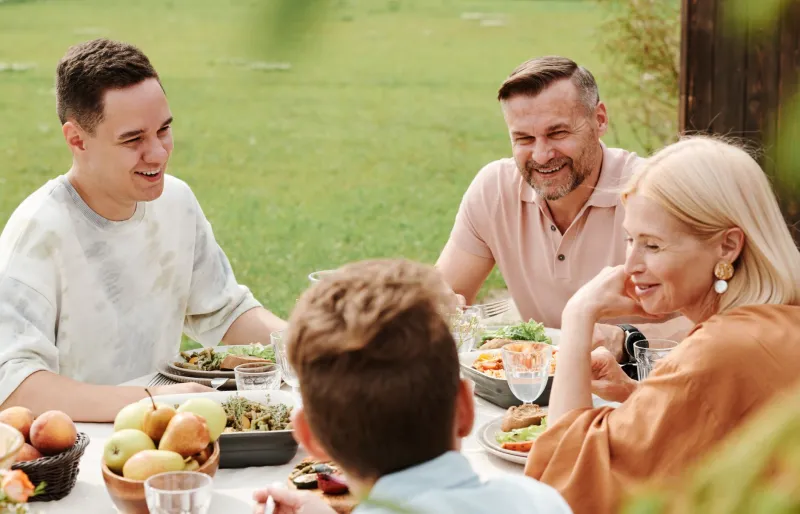
Somewhere between the third helping of butter beans and the second hour of a Sunday afternoon story your granddaddy has told at least forty-seven times before, something quietly extraordinary happens. The noise of the outside world — the notifications, the hustle metrics, the LinkedIn posts about 4 a.m. wake-up routines — just fades out. And for a few hours, time actually belongs to you again.
That feeling? Folks across the South are chasing it on purpose.
In a cultural moment defined by optimization, productivity hacks, and the relentless pressure to be doing more, a growing number of Southern families, entrepreneurs, and community leaders are making a deliberate choice to do the opposite. They're reclaiming the art of slow living — not as a trend they picked up from a wellness influencer, but as something their grandparents practiced without ever giving it a name.
The Hustle Hangover Is Real
Let's be honest: hustle culture has had a good run. For years, the badge of honor was being busy. Exhausted was aspirational. Sleep was for the weak, and anyone who said otherwise clearly hadn't read enough motivational content.
But something cracked. Mental health conversations went mainstream. Burnout stopped being a buzzword and started being a diagnosis. And a lot of people — particularly in the South, where community and kinship have always carried more weight than the quarterly report — started asking a simple question: What exactly are we rushing toward?
"I had a business, a calendar that looked like a game of Tetris, and I hadn't sat down to eat a real meal with my family in three weeks," says Marcus Thibodaux, a 41-year-old contractor and father of four from Lafayette, Louisiana. "I was 'winning' by every measure I'd been taught to care about. And I was miserable."
Thibodaux says it was his mother who intervened — not with a lecture, but with a Sunday dinner invitation she made very clear was non-negotiable. "She said, 'You're coming, you're sitting down, and you're not checking your phone.' That was two years ago. We haven't missed a Sunday since."
Sunday Dinner as Sacred Resistance
The long Sunday dinner is probably the most recognizable symbol of Southern slow living, and it's making a serious comeback. Not as a nostalgic performance, but as a genuine act of cultural reclamation.
In Birmingham, Alabama, the Okafor family has turned their Sunday table into something of a neighborhood institution. What started as a weekly meal for immediate family has grown into a rotating gathering of twenty-plus people — cousins, neighbors, old friends, new ones. The rule is simple: you eat slow, you talk, and nobody leaves until the stories run out.
"People think we're doing something radical," laughs Adaeze Okafor, 38, who works as a school counselor during the week. "We're just doing what Black Southern families have always done. We never stopped. We just got intentional about protecting it."
Adaeze is quick to point out that the mental health benefits aren't incidental. She sees it in her work every day — kids who lack connection, adults who have plenty of acquaintances and nobody to call at 2 a.m. "The Sunday table fixes things that therapy sometimes can't," she says. "It gives people a place where they are known."
The Afternoon Nap: Wildly Underrated, Deeply Southern
If the Sunday dinner is the spiritual anchor of Southern slow living, the afternoon nap is its unsung hero. And yes, we're going there.
The South has always had a complicated relationship with the rest of the country's opinions about rest. There's a reason the phrase "lazy Southerners" got tossed around for generations — and there's also a reason Southerners largely did not care. Because anyone who grew up in Mississippi in July knows that stopping in the middle of the day isn't laziness. It's biology. It's wisdom. It's the kind of common sense that scientists are now spending grant money to confirm.
Research on napping and cognitive function has been piling up for years, and the verdict keeps coming back the same: short rest periods improve creativity, decision-making, and emotional regulation. Which, incidentally, are all things that make you better at running a business, raising kids, and being a decent human being.
"I nap every day between one and two-thirty," says Renee Calloway, a 44-year-old entrepreneur who runs a boutique event planning company out of Savannah, Georgia. "My team used to think it was quirky. Now half of them do it too. Our best ideas almost always come out of the afternoon, after everybody's had a minute to reset."
Renee credits her grandmother — a woman who ran a catering business out of her home kitchen for thirty years — with teaching her that rest was part of the work, not a break from it. "She'd say, 'A tired mind makes expensive mistakes.' She was right then. She's right now."
Storytelling as a Multi-Generational Investment
Maybe the most undervalued practice in the slow living toolkit is also the oldest one: sitting down with the people who came before you and actually listening.
Multi-generational storytelling — grandparents, parents, and kids sharing the same space, the same air, the same history — is something the South has always done well, even when it didn't have a label for it. And in an era where family units are increasingly scattered and communication happens in voice memos and group chats, the deliberate act of gathering to tell and receive stories is becoming something close to radical.
"My grandfather is 84 years old and he has lived a life that no documentary could do justice," says DeShawn Merritt, a 29-year-old graphic designer from Memphis, Tennessee. "I started recording our conversations about two years ago. Not to post them anywhere — just to keep them. For my kids someday. For me."
DeShawn says the practice changed him in ways he didn't expect. "You learn who you are from those stories. You learn what your people survived. And when you know that, the stuff that's stressing you out at work starts to look a little smaller."
Slow Living as a Business Edge
Here's the part that might surprise people who think this is all just charming nostalgia: the entrepreneurs who've embraced slow living are reporting that it's made them better at business, not worse.
The connection makes sense when you think about it. Creativity needs space. Relationships — the kind that generate referrals, partnerships, and loyalty — need time. The problem-solving that happens around a dinner table or on a back porch often outperforms what happens in a formal brainstorm, because people are relaxed enough to actually think.
"I've closed more deals over slow meals than I ever did in conference rooms," Marcus Thibodaux says with a grin. "People do business with people they trust. And trust takes time. You can't rush it."
The South Already Knew
What's striking about this whole conversation is that none of it is actually new. The South didn't invent slow living by reading a think piece or downloading an app. It inherited it — from grandmothers who knew the value of stillness, from communities that understood survival required each other, from a culture that, whatever its complications, always made room at the table.
The shift happening right now isn't really a discovery. It's a remembering.
And if the rest of the country eventually catches up, well — y'all know where to find us. We'll be on the porch. No rush.