Pews to Pitches: How the Southern Church Became the South's Unlikeliest Business Incubator
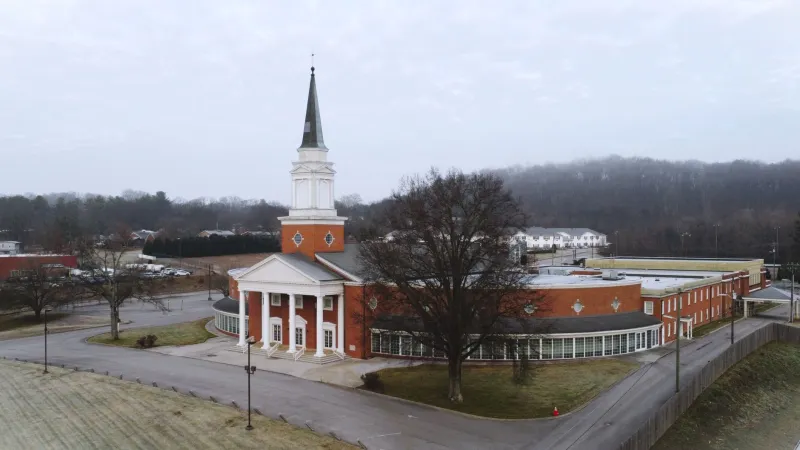
Walk into Mount Calvary Baptist on a Sunday morning in Tuscaloosa and you might catch something that looks a lot less like a sermon and a lot more like a pitch meeting. Not literally — Pastor Dewayne Harris isn't passing out term sheets between hymns. But stay for the fellowship hour afterward, linger near the coffee urn long enough, and you'll hear it: someone mentioning a cousin who does bookkeeping, a deacon who just got his contractor's license, a woman from the third pew who's been selling her pepper jelly at the farmers market and can barely keep up with orders.
It's not organized. It's not branded. But make no mistake — it's working.
Across the South, churches that have always functioned as the backbone of community life are quietly evolving into something new: informal but surprisingly effective launchpads for small business ventures. The infrastructure was always there. The trust was always there. Someone just finally noticed.
The Original Network Nobody Talked About
Southern churches have always been connective tissue. They're where you find out who's hiring, who's moving, who needs help, and who's got skills to offer. For generations, that network ran mostly on whisper and goodwill. But a combination of factors — pandemic-era economic disruption, the rise of the gig economy, and a renewed emphasis on community self-sufficiency — has pushed that informal exchange into something more intentional.
"Church is where I met my first investor," says Tamara Oglesby, who launched a custom floral design business out of Macon, Georgia, three years ago. "She wasn't looking to invest in anything. I wasn't looking for money. But we kept talking after service, she believed in what I was doing, and six months later she helped me cover my first real equipment purchase. We didn't even have a formal agreement at first — it was built on trust."
That word — trust — comes up constantly in these conversations. And it matters more than it might seem. One of the biggest barriers to small business success, especially for first-generation entrepreneurs, is access to capital and networks that believe in you before you've proven anything. Churches, particularly in Black and working-class Southern communities, have been quietly filling that gap for years.
From Skill Shares to Startup Capital
Some congregations have started formalizing what used to be purely organic. A growing number of churches across Tennessee, Mississippi, Alabama, and Georgia have launched what they variously call "entrepreneur ministries," "business fellowships," or simply "kingdom economics" workshops — programs designed to connect members with practical business skills while keeping the mission rooted in faith-based values.
These aren't slick accelerator programs with demo days and venture capital panels. They're more likely to involve a retired accountant from the congregation walking someone through their first QuickBooks setup, or a deacon with thirty years in construction helping a young member understand contractor licensing. The curriculum is informal. The mentorship is real.
At New Hope Community Church outside of Jackson, Mississippi, associate minister and small business owner Reggie Fountain started what he calls a "Kingdom Builder" session that meets twice a month after Wednesday evening service. "We've had people come in with nothing but an idea and leave six months later with an LLC, a business checking account, and their first three clients," he says. "All from people sitting in the same sanctuary every week who just didn't know what the person next to them could do."
The funding side is where things get genuinely interesting. Some churches have quietly established rotating loan funds — small pools of money contributed voluntarily by members and disbursed to congregants launching businesses, often interest-free or at rates far below what a bank would offer. Others facilitate what amounts to community crowdfunding, rallying support for a member's venture through direct giving or patronage. It's a model with deep roots in the Black church tradition, echoing the mutual aid societies that sustained communities during segregation.
Keeping the Spirit in the Strategy
Not everyone is entirely comfortable with the blurring of lines between sanctuary and startup culture. Some pastors worry about the church becoming too transactional, or about the inevitable awkwardness when a business venture between two congregants goes sideways.
"We've had to be careful," admits one pastor in the Atlanta suburbs who asked not to be named. "You get a situation where Brother So-and-So borrowed money from three deacons and the business didn't work out, and now Sunday morning feels different. That's real. You have to build in some accountability and some grace at the same time."
It's a fair tension. The same trust that makes church networks so powerful for entrepreneurship also makes failure feel more personal. And there's always the risk of exploitation — someone leaning on congregational goodwill to fund a venture that was never viable, or a more established member taking advantage of someone newer to business.
The churches navigating this most successfully seem to do so by keeping spiritual values explicitly at the center — emphasizing stewardship, accountability, and collective well-being over individual profit. The goal isn't to turn the nave into a co-working space. It's to make sure that the same ethic of mutual care that shows up in a casserole after a funeral also shows up when someone's trying to build something.
What the Rest of the World Might Be Missing
There's something worth examining here for anyone paying attention to entrepreneurship ecosystems. Silicon Valley spent decades building the kind of high-trust, high-density networks that churches in the rural and suburban South have had all along. The difference is that those tech networks were largely exclusive by design — access required the right school, the right zip code, the right last name.
Church networks, particularly in communities that have historically been shut out of formal capital markets, are inclusive by design. They exist to serve the whole congregation, not just the ones with MBAs.
Tamara Oglesby's floral business now employs two part-time assistants — both from her church. She's referred clients to a photographer, a caterer, and a graphic designer she met in the fellowship hall. "I didn't go to church looking for a business network," she says with a laugh. "But I guess I found one anyway."
Maybe that's the whole point. The South has always known that the most durable structures aren't the ones built from scratch — they're the ones that grow out of something people already believed in. The church was never just a building. It was always a bet on community. Turns out, that's also a pretty solid foundation for a business.