Open Again, Stronger Than Before: The Southern Restaurant Owners Betting Everything on Main Street
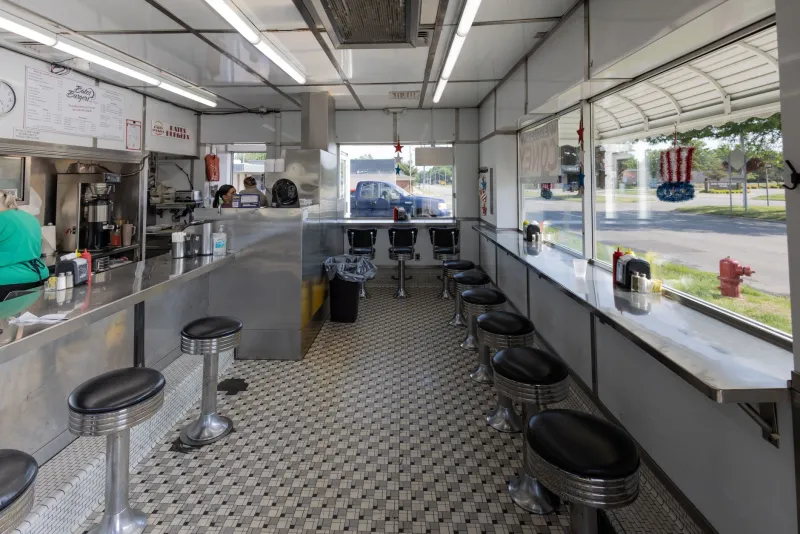
There's a particular kind of quiet that settles over a Main Street when the restaurant lights go dark. Not the peaceful kind — the hollow kind. The kind that makes longtime locals drive a different route just so they don't have to look at the empty windows where the lunch crowd used to spill out onto the sidewalk every Friday.
For a lot of Southern towns, that silence lasted longer than anyone wanted to admit. But walk those same streets today, and something's shifting. Doors are swinging back open. Chalk signs are going up. The smell of something slow-cooked is drifting out onto the sidewalk again. The independent Southern restaurant — stubborn, soulful, and deeply tied to the communities it feeds — is staging one heck of a comeback.
It hasn't been easy. And the owners doing the rebuilding will be the first to tell you that.
Starting Over Without Starting From Scratch
Loretta Simms has been running Simms' Southern Table in Natchez, Mississippi, for going on nineteen years. Her chicken and dumplings have a waiting list on Sundays. But when she reopened after the pandemic, she was essentially running a new business inside a familiar building.
"Everything I thought I knew about ordering, staffing, pricing — I had to relearn all of it," she says, stirring a pot of collard greens without breaking eye contact. "Suppliers I'd worked with for a decade had either gone under or changed their whole operation. My best cook had moved to Atlanta. And customers were coming back, but they were different. More cautious. More particular."
What Loretta didn't do was abandon what made Simms' worth coming back to. The recipes stayed. The hand-lettered daily specials board stayed. What changed was everything happening behind the scenes — a new point-of-sale system, an online ordering setup she'd resisted for years, and a tighter relationship with two local farms that let her lock in pricing and skip some of the supply chain chaos.
"I used to call myself old-fashioned like it was a compliment," she laughs. "Now I call myself adaptable. Same thing, different attitude."
The Staffing Problem Nobody Warned Them About
Ask any independent restaurant owner in the South what keeps them up at night, and staffing comes up before the second sentence. The post-shutdown labor market hit small operations especially hard. Big chains could offer signing bonuses and benefits. Family-owned spots had to get creative.
Marcus Teel opened Teel's Smokehouse in Decatur, Alabama, back in 2014 with his brother Darnell. By 2022, they were operating with roughly half the staff they needed and stretching themselves thin to compensate.
"We were working doubles six days a week," Marcus says. "That's not sustainable. You start cutting corners without meaning to, and that's when you lose what made people love you in the first place."
Their solution was unconventional but very Southern: they leaned on community. They partnered with a local culinary program at the community college, offering paid apprenticeships and flexible scheduling built around class hours. Three of their current employees came up through that program. One of them, a 22-year-old named DeShawn, is now running their weekend pit operation with the kind of authority that takes most people a decade to develop.
"We stopped thinking about hiring as filling a slot," Darnell adds. "We started thinking about it as growing people. That changed everything."
When the Menu Becomes a Mission Statement
Down in Beaufort, South Carolina, Chef Priya Nair took over a shuttered diner space in 2021 and turned it into something the town hadn't seen before — a Southern kitchen with a quietly international soul. Her restaurant, called Lowcountry & Then Some, serves shrimp and grits alongside tamarind-glazed pork ribs and a sweet potato curry that regulars now treat as essential as the cornbread.
Priya, who grew up in Chennai and moved to South Carolina after culinary school, says she never set out to reinvent Southern food. She set out to be honest about her version of it.
"Southern cooking has always absorbed influences and made them its own," she says. "That's literally the history of the cuisine. I'm just doing what the tradition has always done."
The community response was warmer than she expected. Local food writers took notice. A write-up in a regional magazine brought in visitors from three states. But what matters more to Priya is the Tuesday afternoon regulars — the retired shrimpers and the courthouse clerks and the high school teachers who come in not because it's trendy, but because it feels like a place that belongs to them.
"That's the thing about Main Street restaurants," she says. "They're not just about food. They're about belonging somewhere."
New Tools, Old Soul
One of the more unexpected trends among recovering Southern restaurants is the embrace of technology — not to replace the personal touch, but to protect it. Owners who spent years resisting Instagram or online reservations have quietly become converts, not because they wanted to, but because the numbers made the argument for them.
In Greenville, Tennessee, fourth-generation restaurateur Bobby Ray Hutchins started using a simple customer loyalty app at his family's diner, Ray's Place, after a consultant friend suggested it during a slow stretch. Within six months, repeat visit rates had climbed noticeably, and Bobby Ray had a clearer picture of what his customers actually wanted versus what he assumed they wanted.
"Turns out people weren't ordering the meatloaf because they didn't know it was on the menu," he says, shaking his head. "Forty years of meatloaf and I had to learn that from an app."
But Bobby Ray is careful about where technology ends and tradition begins. The app handles reservations and rewards points. The recipes still come from a spiral notebook his grandmother kept in the kitchen drawer.
"Some things you digitize," he says. "Some things you protect."
What Main Street Needs From Its Kitchens
The broader story here isn't just about restaurants surviving — it's about what happens to a community when they do. Independent eateries anchor downtown foot traffic, employ local workers, source from nearby farms, and give neighborhoods a reason to gather. When they struggle, the ripple effect is real and visible.
The owners rebuilding right now aren't just chasing profit margins. They're reclaiming something that got taken from their towns, and they're doing it with the particular brand of determination that the South has always been good at producing — quiet, stubborn, and absolutely not interested in giving up.
Loretta Simms puts it plainly as she flips the sign on her door from "Closed" to "Open" on a Tuesday morning.
"People keep asking me if it's worth it," she says. "I tell them to come in and sit down. That's my answer."
The biscuits, for the record, are still perfect.