Saturday School: What Farmers' Markets Are Really Teaching the Next Generation of Southern Business
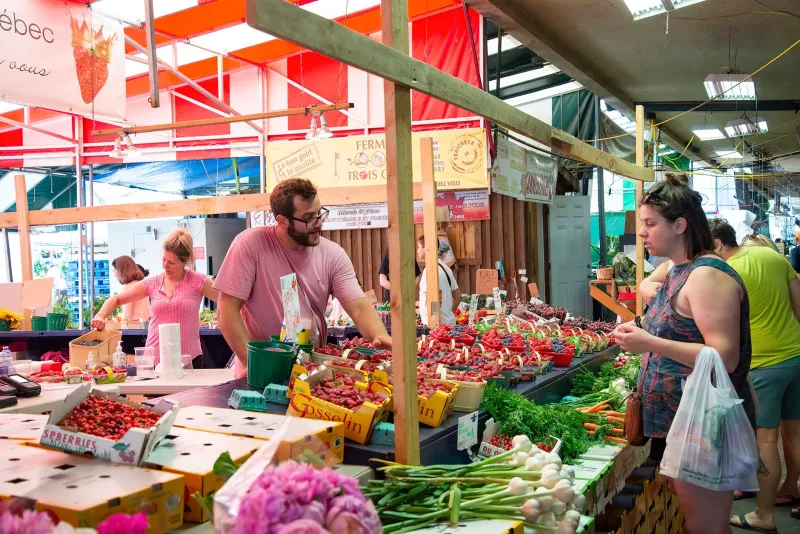
Show up at the Chattanooga Market before 7 a.m. on a Saturday and you'll catch something most business schools can't replicate. Canopies snapping open in the early light. Coolers cracked, jars lined up, handwritten signs adjusted and readjusted. And somewhere between the tomato towers and the honey displays, conversations happening that sound a whole lot less like small talk and a whole lot more like strategy sessions.
This is the South's open-air MBA — and it's been enrolling students for generations.
More Than a Market
Farmers' markets across the South have always carried a certain romance. The mason jars. The heirloom varieties. The old-timer who's been selling the same pepper jelly since the Reagan administration. But spend a few Saturdays actually listening — not just shopping — and a different picture emerges. These markets are functioning business ecosystems, and the vendors running them are, quietly and without any fanfare, some of the sharpest operators in their regions.
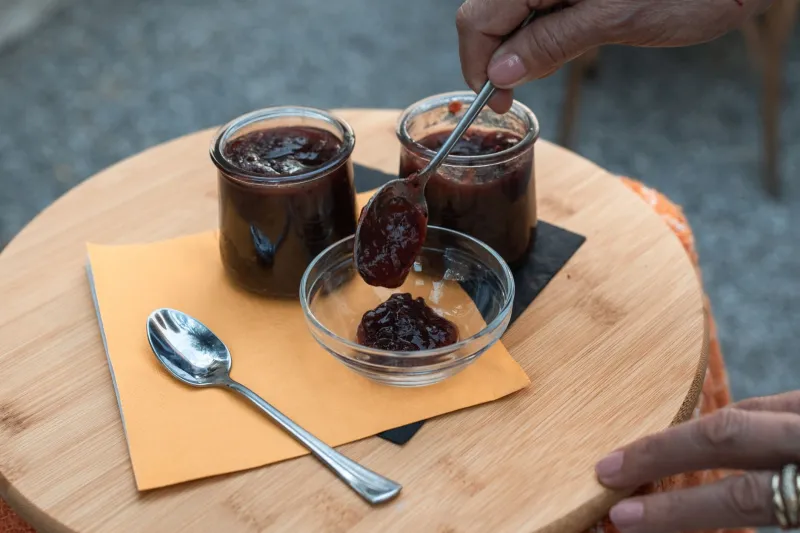
Take Darlene Hutchins, who's been selling preserves and pickled vegetables at a farmers' market outside Meridian, Mississippi for going on twenty-two years. She started with two card tables and a handwritten price list. Today she runs a small-batch production operation, supplies four local restaurants, and mentors newer vendors on everything from label compliance to cash flow management.
"People think I'm just out here selling jam," Darlene says, laughing. "I'm out here running a business. I just happen to do it outside."
She's not wrong. And she's far from alone.
The Curriculum Nobody Wrote Down
What gets taught at these markets isn't codified anywhere. There's no syllabus. But the lessons are remarkably consistent from Asheville to Baton Rouge.
Pricing is usually the first hard lesson. New vendors often underprice their goods, either out of uncertainty or a misplaced sense of humility. The veterans notice. And in the generous, roundabout way that's distinctly Southern, they find a way to address it — maybe a comment about what a similar product fetched last season, maybe a quiet word about not leaving money on the table.
"There's an art to pricing that you don't learn from a book," says Marcus Webb, a third-generation peach grower who works a stretch of markets across middle Georgia. "You learn it by watching, by asking questions, by making mistakes in front of people who are kind enough not to rub your face in them."
Supply chain management is another module in this informal curriculum. Small producers have to navigate planting schedules, weather variables, transportation logistics, and shelf life — all while maintaining consistent volume for customers who expect to see them every single week. One bad frost can wipe out a crop. One slow Saturday can strain a monthly budget. The vendors who last learn to plan around uncertainty in ways that would impress any operations professor.
And then there's marketing — perhaps the most nuanced lesson of all. At a farmers' market, you are your brand. The way you set up your table, the story you tell about your farm, the samples you offer, the way you remember a returning customer's name — all of it is marketing, and all of it is being observed and absorbed by the newer vendors watching from two stalls down.
Community as Infrastructure
One thing that separates the Southern farmers' market experience from a generic business incubator is the role of community. These aren't transactional spaces. They're social ones. And that social fabric turns out to be surprisingly good for commerce.
Vendors refer customers to each other. They cover for a neighbor who has a family emergency. They share intel about which products are moving and which ones are sitting. They build the kind of trust that eventually turns into actual business partnerships — a baker who sources her eggs from the poultry vendor two rows over, a hot sauce maker who uses peppers grown by the farmer she's been chatting with every Saturday for six years.
Loretta Simms runs a cut flower operation out of a small farm near Natchitoches, Louisiana. She started coming to her local market as a customer before eventually becoming a vendor. She credits the relationships she built there — with other vendors, with loyal buyers, with the market manager who took a chance on her — as the actual foundation of her business.
"The market didn't just give me a place to sell," she says. "It gave me a network. That's worth more than any loan or grant I could've applied for."
The Knowledge Transfer Problem
For all its richness, this informal system has a fragility to it. The knowledge lives in people, not documents. When a longtime vendor retires or passes, decades of hard-won experience can go with them unless someone was paying close attention.
Some markets have started addressing this more intentionally. Mentorship programs that pair new vendors with established ones. Workshops on business licensing, food safety regulations, and e-commerce options. A few have even partnered with local community colleges to offer credit-bearing courses that recognize the practical education happening in those Saturday morning rows.
Marcus Webb sees it as an urgency issue. "We've got knowledge out here that doesn't exist in any classroom," he says. "If we don't find ways to pass it on, it just disappears. And that's a loss — not just for farmers, but for the whole region."
Why the South Does This Differently
You could argue that farmers' markets everywhere function as informal business schools. And you'd have a point. But there's something about the Southern version that runs a little deeper.
Maybe it's the multigenerational nature of so many of the operations — families who have been farming the same land and selling at the same market for decades, who carry institutional memory that stretches back further than any business plan. Maybe it's the culture of hospitality that makes knowledge-sharing feel natural rather than competitive. Maybe it's the economic reality of rural Southern communities, where the market isn't just a nice weekend activity but a genuine economic lifeline that people have a stake in protecting.
Probably it's all of those things at once.
"Out here, if your neighbor fails, it reflects on all of us," Darlene Hutchins says. "So you want them to succeed. You help them figure it out. That's just how it works."
Showing Up Is the Whole Thing
The most important lesson the Southern farmers' market teaches might also be the simplest: show up, week after week, and do the work. In an era obsessed with scale and disruption and overnight success, there's something quietly radical about a business model built on consistency, relationships, and the willingness to be present.
Every Saturday morning, before most of the region has finished its first cup of coffee, a few thousand Southern vendors are already out there setting up tables, arranging product, and getting ready to teach — whether they'd describe it that way or not.
Class is in session. And the tuition is a bag of tomatoes and the good sense to pay attention.